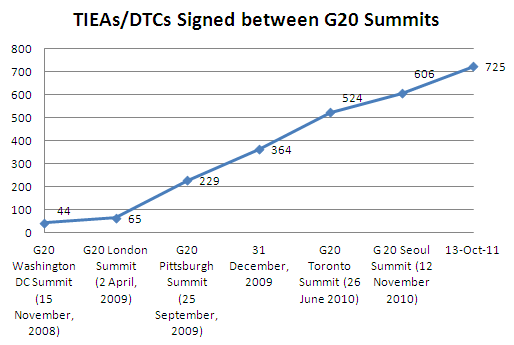
Tax Avoidance In Malaysia
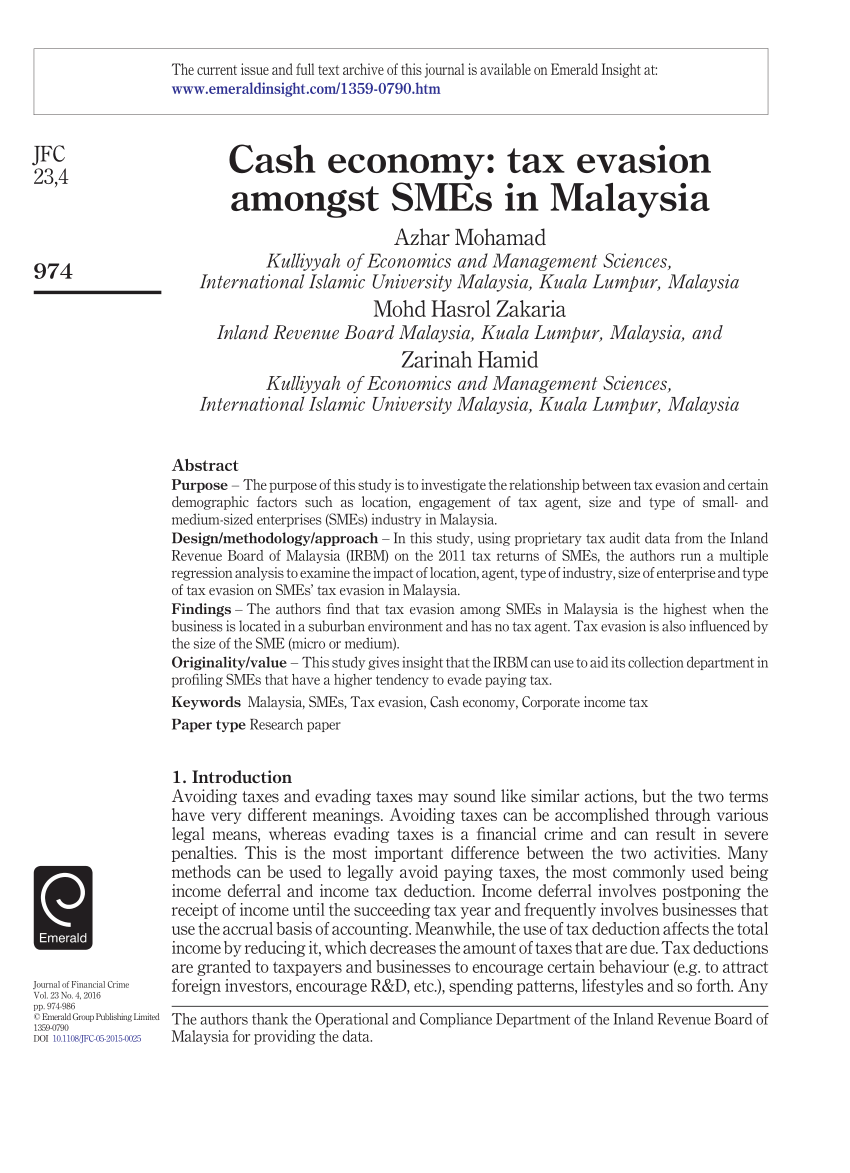
Pdf Cash Economy Tax Evasion Amongst Smes In Malaysia
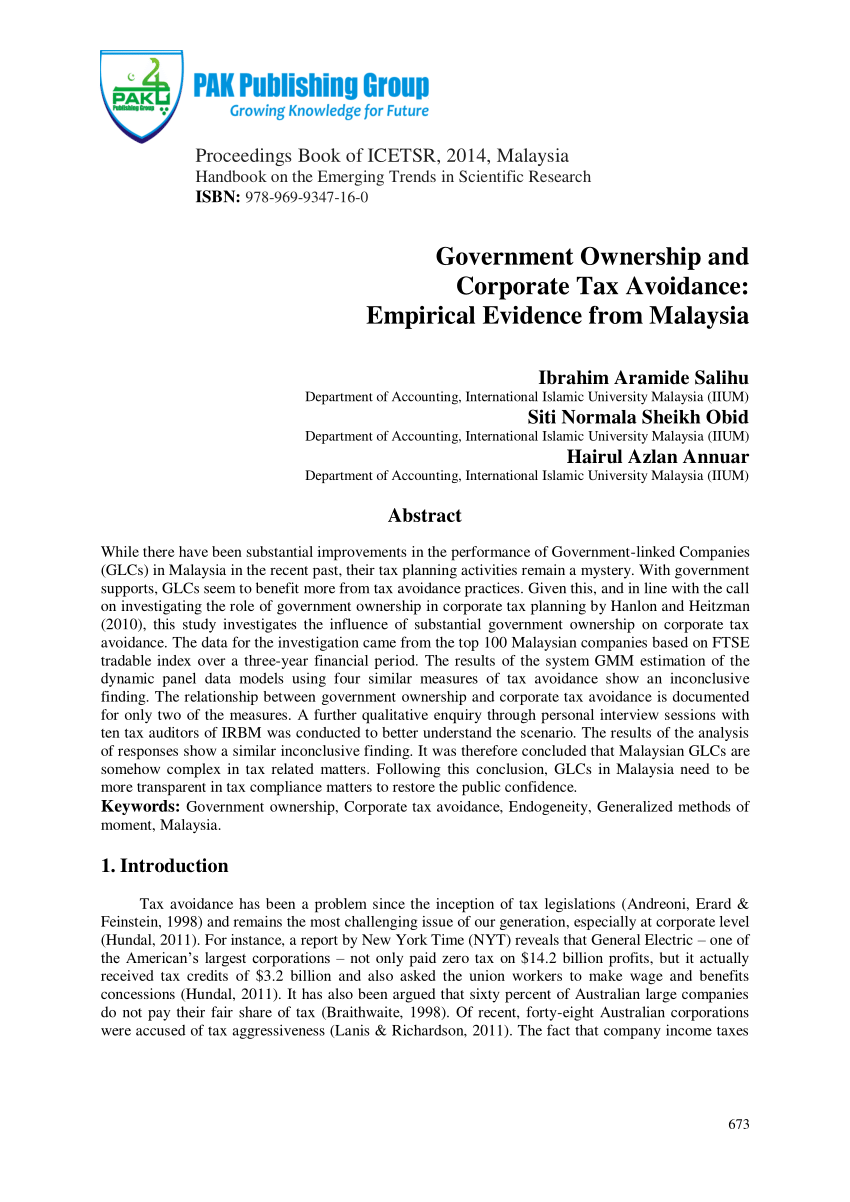
Pdf Government Ownership And Corporate Tax Avoidance Empirical Evidence From Malaysia
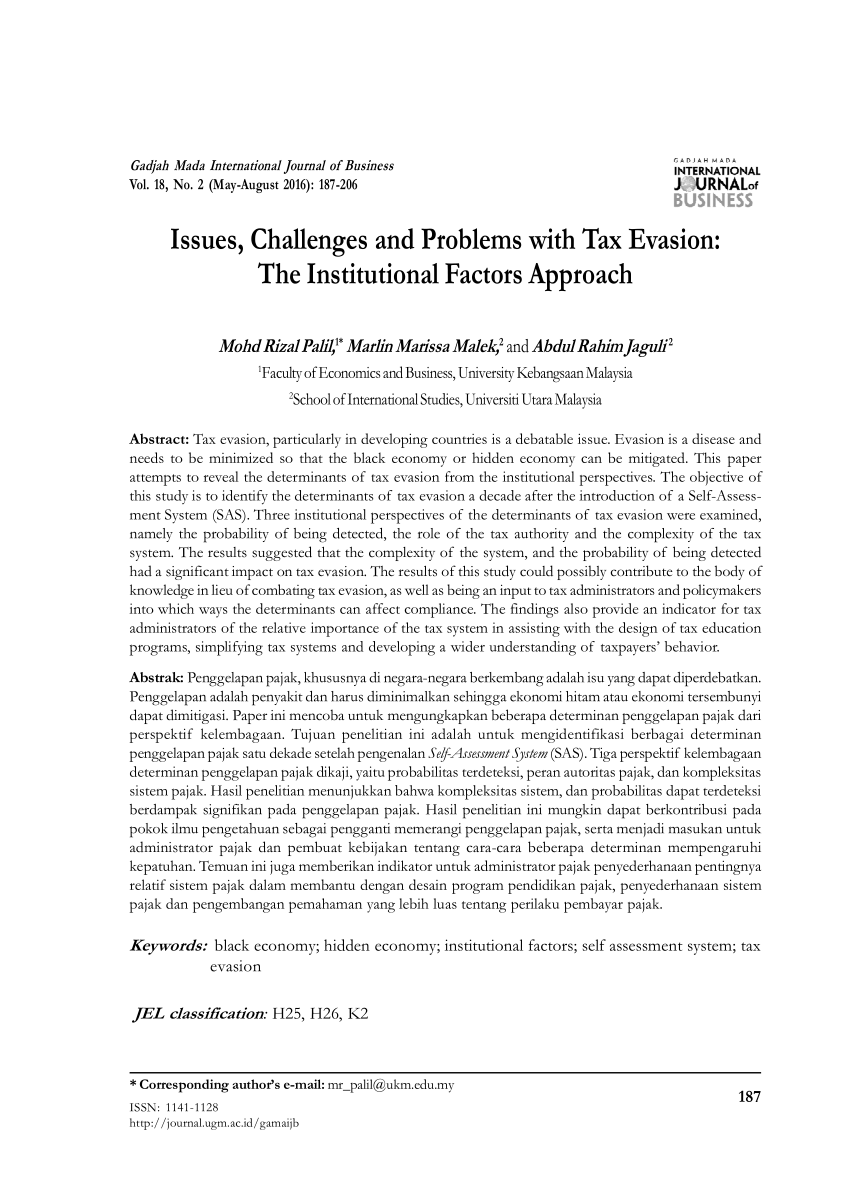
Pdf Issues Challenges And Problems With Tax Evasion The Institutional Factors Approach

Pdf Government Ownership And Corporate Tax Avoidance Empirical Evidence From Malaysia Semantic Scholar

Is Tax Avoidance Legal In Malaysia
Chapter 1
/tax-avoidance-vs-evasion-397671-v3-5b71dfc846e0fb0025e54177.png)
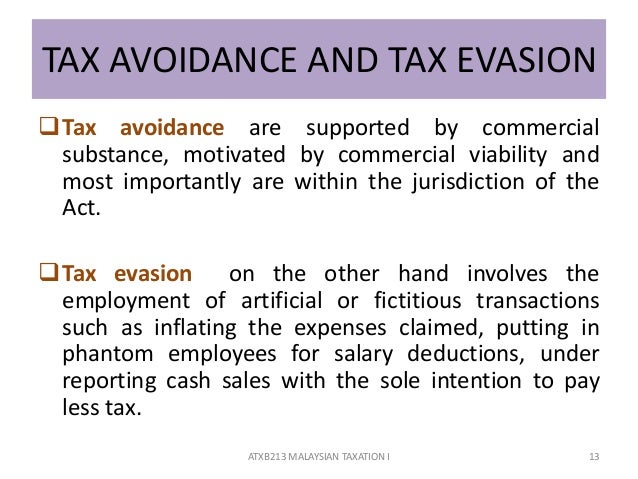
Tax avoidance is the legitimate minimizing of taxes and maximize after tax income using methods included in the tax code.
Tax avoidance in malaysia. In malaysia there are. Although tax avoidance is acceptable in the eyes of law in malaysia the tax authority taken an extreme change of stance since 2010 and triggered section 140 of the malaysia income tax act more often that it does historically. Tax avoidance this alert talks about the delicate issue of tax avoidance under section 140 of the income tax act 1967. Pwc alert issue 116.
Thus in most tax jurisdictions anti avoidance provisions are included in the tax laws to defeat or pre empt anticipated avoidance schemes mischief or to plug loopholes that have come to light. In malaysia income tax act contains general and specific anti avoidance provision which empowers the director general to disregard schemes that are not commercially justified or are merely set up to avoid tax despite their legal form. In the remaining parts of the article i will discuss examples of cases that would highlight the good the bad and the ugly of section 140 of the act. If the dominant purpose of a transaction has no commercial purpose then that transaction will be disregarded or varied as being for the purpose of tax avoidance by tax authority there.
Income tax in malaysia is imposed on income accruing in or derived from malaysia resident and business. The text of this agreement signed on 26 december 1968 and is shown in annex a. Section 140 of the act is indeed an anchor provision concerning tax avoidance. The australian position is similar to malaysia.
From the perspective of revenue authorities it is equally important to counter tax avoidance. In malaysia by virtue of s 140 1 the dgir is entitled to disregard or vary any transaction that is created merely for the purposes of tax avoidance. If you are working in malaysia for more than 182 days a year the government considers you to be a tax resident and you will pay progressive tax rates and be eligible for tax deductions. It discusses the decision of the court of appeal in a recent tax case and the questions on the parameter of legitimate tax planning.
Businesses avoid taxes by taking all legitimate deductions and tax credits and by sheltering income from taxes by setting up employee retirement plans and other means all legal and under the internal revenue code or state tax codes. One thing worth mentioning is malaysia has an extensive number of double tax treaties available for the avoidance of double taxation.
Tax Avoidance Evasion And Planning In Malaysia Malaysia Taxation
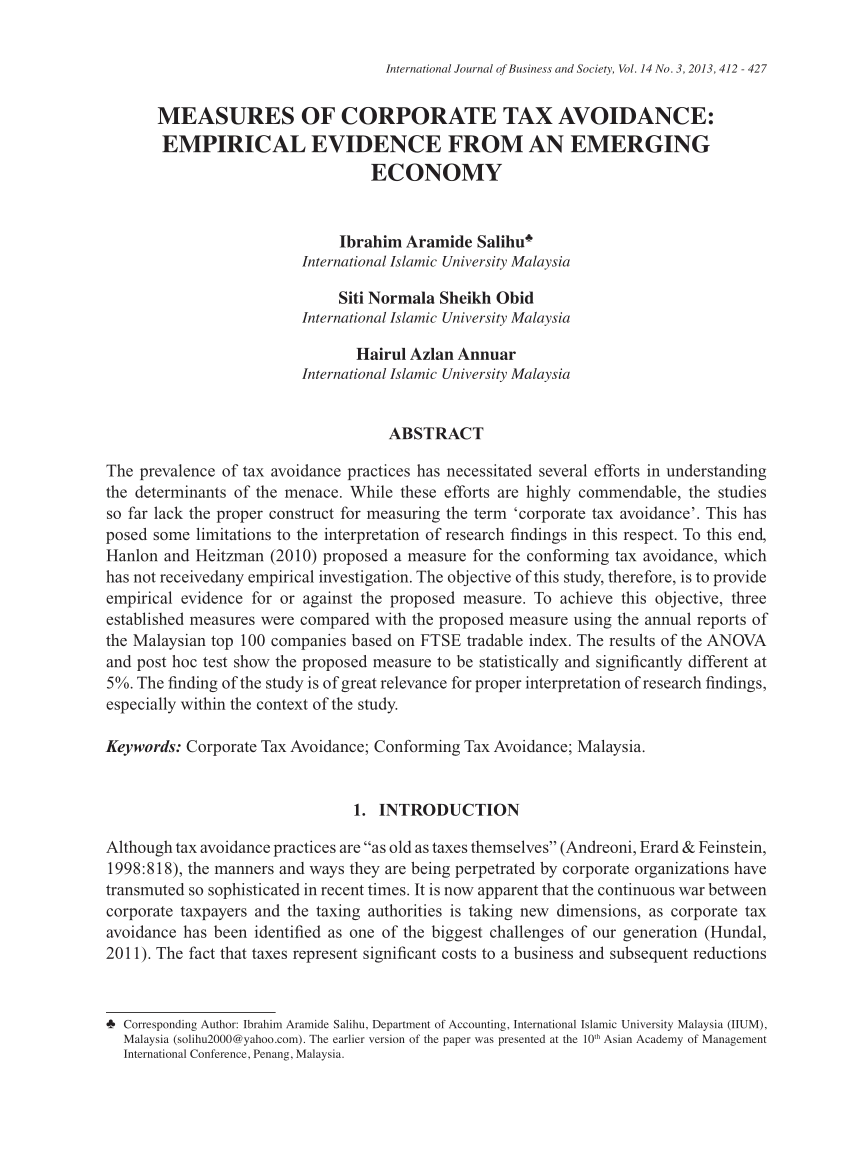
Pdf Measures Of Corporate Tax Avoidance Empirical Evidence From An Emerging Economy
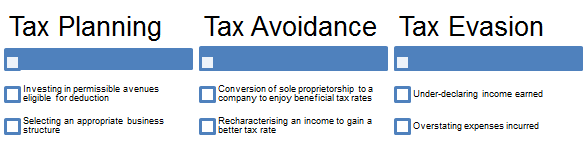
Wkisea Treading The Fine Line Between Tax Planning And Tax Avoidance
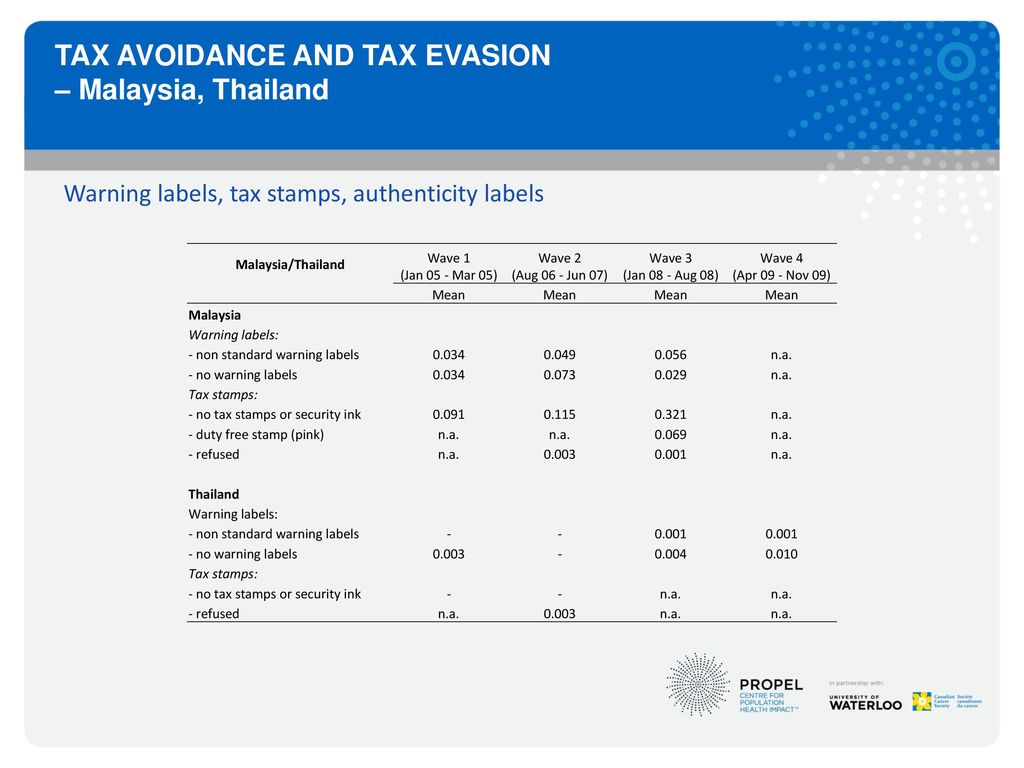
Tax Avoidance And Tax Evasion In 14 Itc Countries Ppt Download
Http Www Accaglobal Com Content Dam Acca Global Pdf Sa Nov11 Antiavoidancemys Pdf

Pdf Estimating Factors Affecting Tax Evasion In Malaysia A Neural Network Method Analysis Semantic Scholar

Ktps Consulting Tax Avoidance Case Free Loans Facebook

Penalty For Late Submission Of Personal Tax Return In Malaysia
Pdf The Influence Of Education On Tax Avoidance And Tax Evasion
Tax Avoidance And Tax Evasion What Is The Difference
Https Heinonline Org Hol Cgi Bin Get Pdf Cgi Handle Hein Journals Intaxjo21 Section 14
Http Www Ukm My Fep Perkem Pdf Perkemvii Pkem2012 5d4 Pdf

Pdf The Relationship Of Corporate Tax Avoidance Cost Of Debt And Institutional Ownership Evidence From Malaysia Semantic Scholar